
Online Education Geographic Strategy: Why Most Universities Are Reading the Map Wrong

Updated: Mar 3
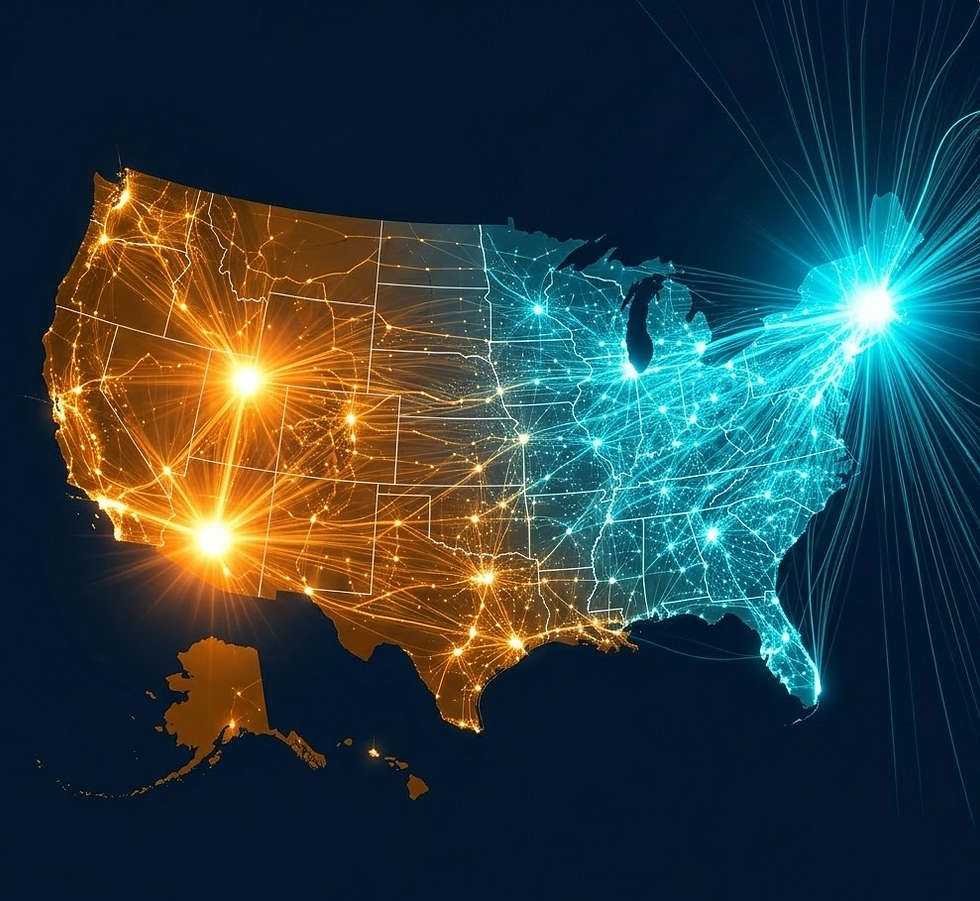
For years, higher ed told itself a comforting story: put programs online and geography stops mattering. Students can come from anywhere. Scale becomes unlimited.
Nice theory. Wrong reality.
In a recent article, industry analyst Phil Hill used NC-SARA (National Council for State Authorization Reciprocity Agreements) data to reveal something that should stop every digital leader in their tracks — online higher education still follows geographic patterns far more than most institutions assume. More than 63% of fully online students enroll in institutions within their own state.
That means the online market behaves far less like a single national pool and far more like a network of regional enrollment ecosystems.
If that's true — and the data says it is — then most institutional digital strategies are built on the wrong competitive model entirely.
Hill's analysis makes visible something many campus teams already feel but rarely articulate: online higher ed isn't borderless. It's layered. And three distinct competitive patterns are emerging.
National Exporters: The Platform Universities
A small group of institutions operate less like traditional universities and more like scaled digital businesses.
Western Governors University (WGU), Southern New Hampshire University (SNHU), Arizona State University (ASU), Liberty University, Grand Canyon University (GCU), and the University of Phoenix don't just offer online programs — they operate national recruitment infrastructure.
They’ve built:
Search dominance
Massive program visibility
Optimized enrollment funnels
Brand clarity around adult learners
These institutions pull students across state lines at scale — not because of academic reputation alone, but because their digital visibility and enrollment systems are engineered for national reach.
Retention Systems: State-Level Online Enrollment Strength
Some states hold onto their online students. Arizona is a compelling example. Its scaled institutions serve both in-state and national markets simultaneously — a powerful combination that most regional universities can't claim.
What makes these systems work isn’t aggressive national marketing.
It’s state-specific digital positioning.
They anchor online education inside a regional story:
Clear workforce alignment
Employer-connected pathways
Adult learner messaging tied to local opportunity
Visible transfer and re-entry entry points
Leakage States: Where Online Enrollment Quietly Leaves
Then there are states quietly losing the enrollment battle. Washington retains barely half of its fully online students, with a significant share choosing institutions elsewhere.
This isn't just an enrollment problem.
It’s a digital discovery problem.
When students can’t easily find or understand their own state's online options, national brands win by default.
The moment a search result, an AI recommendation, or a competitor’s program page feels clearer than yours, the student has already left — digitally — long before they leave geographically.
They make the case that staying in-state makes sense — and they make it clearly.
AI Search, Policy, and the Territorial Future of Online Enrollment
The first wave of online education was about delivery.
The next wave is about territory.
Hill’s analysis signals this shift — including policy debates in California about aid eligibility for out-of-state providers — but the deeper change is strategic.
Three converging forces are reshaping online education geographic strategy:
Policy Pressure - Aid structures, funding rules, and workforce incentives increasingly favor in-state institutions.
Institutional Scale Concentration - A small group of universities already operate nationally. That group is unlikely to shrink.
AI-Driven Regional Discovery - AI search tools, employer pathway platforms, and workforce alignment systems reinforce local relevance — even in digital environments.
Online programs may live in the cloud. But competition is becoming territorial.
Why Universities Need Online Education Geographic Strategy
Within five years, online enrollment competition won’t revolve around national marketing reach.
It will revolve around state-specific digital positioning.
The winners will:
Build targeted program visibility by state
Demonstrate employer alignment in specific regions
Create adult learner pathways tied to local workforce demand
Optimize content so AI tools associate them with specific labor markets
In other words, universities will need a territory strategy.
Read the Map or Lose the Territory
Most institutions still track online growth in aggregate: total headcount, total applications, total funnel numbers.
That view hides what actually matters:
Where are online students coming from?
Which states are you losing?
Do program pages reflect regional workforce demand?
Would AI tools associate your institution with opportunity in those states?
Online education never stopped being geographic. It just got easier to pretend it wasn’t.
The next era of enrollment will be defined by institutions that understand this:
Online education isn’t borderless. It’s geographic. And the universities that read that map correctly will own their regions.
Everyone else will keep talking about national reach while their students quietly enroll somewhere else.


